Samson Rope
Samson Zing-It Throw Line, 180 ft.
Slick, low-friction throw line for setting climbing and rigging lines high.
Typical $40
 Featured Gear
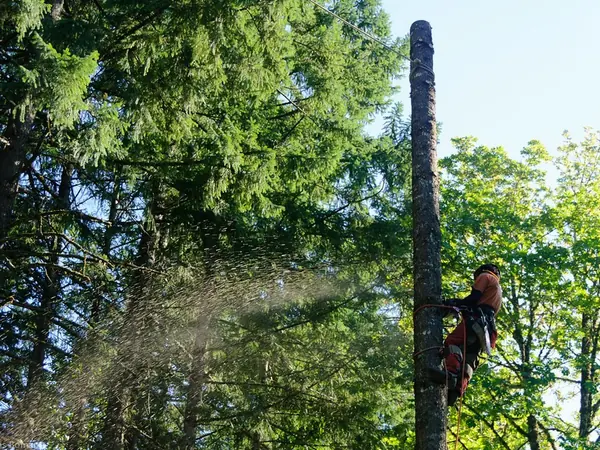
Representative photo. Check the retailer listing for the exact model, color and size.
Photo: Arborist Cutting by matt.boman, CC BY 2.0
A portable hand-operated rope winch for felling, pulling and positioning loads.
The Masdaam rope puller kit is a hand-operated, continuous rope winch that gives a small crew real pulling force without a truck or capstan. It pulls rope through the unit with a lever, so the rope length is limited only by the line you bring.
A lot of tree work comes down to pulling. A back-leaner needs help to go where you want it, a hung-up tree needs to come down safely, or a big limb has to be pulled away from a roof as it is lowered. Trucks can pull, but they cannot get into a fenced backyard, and pulling by hand with a crew is slow and hard to control.
The Masdaam continuous rope puller is a portable hand winch. You anchor it to a solid stump or tree, feed rope through it, and work the lever to draw the rope in. Because the rope passes through the unit instead of winding on a drum, you can pull as much rope as you have.
Compared with a come-along or a cable winch, a rope puller is lighter to carry and does not run out of cable halfway through the pull. The rope is softer on the tree than wire, and it is easy to coil and pack away at the end of the day.
Pick an anchor that is stronger than the load you plan to put on it, such as a large sound stump or tree at the base, and attach the puller with a rated sling. Run the rope to the tree you are pulling, attached high enough for good leverage. A redirect pulley lets you set the puller off to the side, out of the line of fall.
Keep the rope path clear of people. Stand at the puller, out of the fall zone, and make sure everyone knows the plan before anyone starts cutting. Tension the rope before the cut so the tree is already being helped in the right direction.
Use rope that matches the puller's specification for diameter and type; the wrong rope can slip or wear the mechanism. Work within the rated load of the puller, the rope, the slings and the anchors. Mechanical advantage systems and redirects multiply forces on anchors, so plan those loads before you pull.
Never use a rope puller to lift or lower people. It is rigging and pulling equipment only.
The kit makes the most sense for small crews and homeowners-turned-pros who need controlled pulling force on sites a truck cannot reach. It is also a good backup when the capstan is on another job. Anyone using it should be trained in felling, rigging forces and the manufacturer's instructions. Pair it with a throw line to set your pull line high in the tree.
Keep the puller clean and dry, check the jaws or grip mechanism for wear, and store the rope in a bag so grit does not get carried into the mechanism. Inspect slings and rope before every pull, and retire anything damaged.
| Brand | Masdaam |
|---|---|
| Type | Manual continuous rope puller |
| Operation | Lever-operated |
| Rope | Use the rope type and diameter specified by Masdaam |
| Capacity | See the kit's rated load |
Specs are from the manufacturer's published figures where available. Confirm against the product listing before you buy.
It pulls rope continuously through the unit, so length is set by the rope you bring, not a drum.
Yes, that is a common use, as long as anchors, rope and the puller are rated for the load and the operator is trained.
No. It is lever-operated by hand.
Pairs well with
Samson Rope
Slick, low-friction throw line for setting climbing and rigging lines high.
Clogger
Light, breathable chainsaw pants built so climbers actually keep them on.
Edelrid
Short lengths of Edelrid static rope for lanyards, slings and rigging bits.
Edelrid
Short lengths of Edelrid static rope for lanyards, slings and rigging bits.
Masdaam Continuous Rope Puller Kit$549