Husqvarna
Husqvarna Combination Tool Wrench
The one tool every Husqvarna saw owner should have on the belt.
Typical $10
 Wrenches & Files
Representative photo. Check the retailer listing for the exact model, color and size.
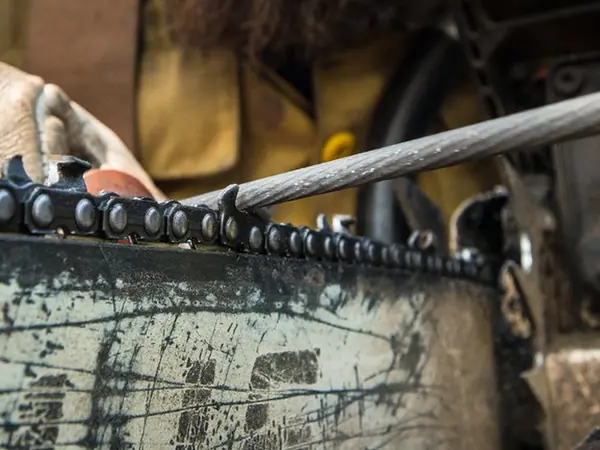
Photo: chainsaw sharpening by nationalrural, CC BY 2.0
The bar wrench, or scrench, every saw kit should have: bar nuts, tension and carb tweaks.
A chainsaw wrench, often called a scrench, combines a bar nut socket with a flat screwdriver tip on one simple tool. It is what you reach for to tension a chain, swap a bar or make a quick idle adjustment on the job.
A chain stretches as it warms up and wears, and a loose chain can jump the bar. Tensioning it is a two-minute job if you have a wrench in your pocket and a ten-minute walk if the only one is in the truck. That is why sawyers keep a chainsaw wrench on the belt, in the saw case and in the truck box.
The screwdriver end handles the chain tensioner screw on most saws, plus quick idle adjustments and loosening the screws on air filter covers. The socket end fits the bar nuts. Together they cover almost everything you do to a saw in the field besides sharpening.
It also comes in handy for quick checks that prevent bigger problems: snugging a loose handle screw, opening the clutch cover to clear packed chips, or tightening a muffler bolt that has backed out. Small fixes done early keep a saw running all season.
Bar nut sizes vary by brand and model. Before ordering, check the socket size the saw's manual lists, or measure the nut. A wrench that fits loosely rounds the nuts over time and slips when you need to break them free.
If you run saws from more than one brand, keep a wrench that fits each, and label them. Crews that run mixed fleets often lose time hunting for the right one.
Some saws use captive bar nuts or tool-less tensioning systems. Even then, a wrench comes in handy for the occasional stubborn nut or for adjusting the carburetor, so it is still worth keeping one in the kit.
With the saw off and the chain brake on, loosen the bar nuts slightly. Lift the nose of the bar and turn the tensioner until the chain sits snug against the bottom of the bar but can still be pulled around by hand with gloves on. Holding the nose up, tighten the bar nuts firmly.
Recheck tension after the first few cuts with a new chain and whenever the chain has cooled after a long run, since a chain tensioned hot can tighten too much as it cools. Wear gloves when handling the chain.
Pair the wrench with a good file kit from our wrenches and files section to keep the saw cutting well all day.
A chain that is too tight wastes power, overheats the bar and wears the sprocket. A chain that is too loose can derail and is more likely to cause damage or injury. Check tension at every refuel and you will rarely have either problem.
Bar wrenches are easy to lose in leaves and chips. Painting the handle a bright color helps, and a cheap spare in the glovebox has saved more than one job. Replace any wrench whose socket is cracked or worn round.
| Type | Combination bar wrench (scrench) |
|---|---|
| Functions | Bar nut socket, screwdriver tip |
| Material | Steel |
| Use | Chain tension, bar changes, minor adjustments |
| Fit | Check socket size against your saw's bar nuts |
Specs are from the manufacturer's published figures where available. Confirm against the product listing before you buy.
It is a combination tool with a bar nut socket on one end and a screwdriver tip on the other, used to tension chains and change bars.
Check the bar nut size in your saw's manual or measure the nut, and compare it with the socket size in the listing.
Snug against the bottom of the bar but still easy to pull around by hand with gloves on. Always check with the saw off and the brake on.
Pairs well with
Husqvarna
The one tool every Husqvarna saw owner should have on the belt.
Pferd
A dozen quality round files for keeping saw chain sharp in the field.
Husqvarna
Simple jointer that sets raker height on 3/8 pitch chain.
Husqvarna
Field vise you tap into a stump to hold the saw steady for filing.
Pferd
2-in-1 guide that files cutter and raker together in a single stroke.
Timber Savage
Flat file for lowering rakers and cleaning up bar rails.
Timber Savage
Round files for sharpening chainsaw cutters, sized by chain pitch.
Pferd
A file holder that squares up worn chainsaw bar rails so cuts run straight.
Chainsaw Bar Wrench$9