Gap Arborist Supply
Arborist Foot Loop
A simple adjustable foot loop that helps you stand and push while ascending.
Typical $29
 Foot Ascenders & Loops
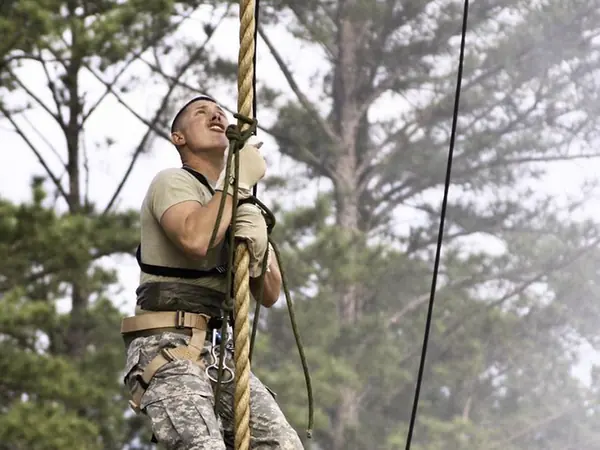
Representative photo. Check the retailer listing for the exact model, color and size.
Photo: Prusik climb by Georgia National Guard, CC BY 2.0
A foot ascender from ISC for walking up a single rope.
The ISC Stryder foot ascender clips the rope at your boot so you can push with your legs on an SRS ascent. ISC makes a wide range of arborist hardware, and the Stryder is its option for climbers who want a more efficient climb.
A foot ascender holds the rope below your other ascent gear. Step up, stand, slide your upper device, and repeat. The motion feels like climbing stairs and uses your strongest muscles, which keeps you fresher for the work at the top.
Most climbers put it on the right foot and practice releasing it smoothly before moving to a working height.
Fit matters more than you would expect. A foot ascender that twists on your boot or catches the rope at a poor angle will slow you down. Spend time on the ground adjusting the strap and practicing the stride, and keep your rope weighted at the bottom if it tends to lift as you step.
Check the cam, spring, and teeth for wear and debris, and inspect the foot strap or attachment before each climb. Keep it clean of sap and grit so it grips and releases cleanly.
Store the ascender clean and dry with your climbing kit, and keep the cam free of sap and grit. A cam that sticks or springs back slowly needs cleaning or replacing before your next climb.
Compare other foot ascenders and foot loops. A foot ascender is not a life-support connection. Life-support gear must meet the applicable standard (ANSI Z133 and the manufacturer's instructions), be inspected before every use, and be used only by trained climbers.
| Brand | ISC |
|---|---|
| Type | Foot ascender |
| Primary use | SRS ascent |
Specs are from the manufacturer's published figures where available. Confirm against the product listing before you buy.
Most climbers use the right foot, but use whichever feels natural and matches your training.
You need to release it from the rope before changing over to descent. Follow the manufacturer's instructions.
Pairs well with
Gap Arborist Supply
A simple adjustable foot loop that helps you stand and push while ascending.
CMI
A boot-mounted rope ascender that turns every step into upward progress.
SAKA
A knee ascender for efficient rope walking that folds away once you are up.
Climbing Technology
A foot ascender that makes SRS rope walking faster and easier.
Climbing Technology
A replacement foot strap that keeps a Quick Step snug on your boot.
Climbing Technology
An ascender that mounts on your spur for rope ascent on removals.
Edelrid
A foot-worn ascent aid from Edelrid for faster rope climbing.
Notch
A foot ascender from Notch for faster, easier SRS climbing.
ISC Stryder Foot Ascender$149