Gap Arborist Supply
Arborist Foot Loop
A simple adjustable foot loop that helps you stand and push while ascending.
Typical $29
 Foot Ascenders & Loops
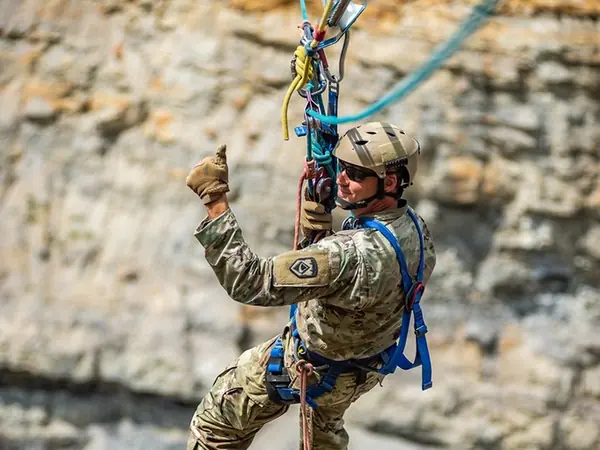
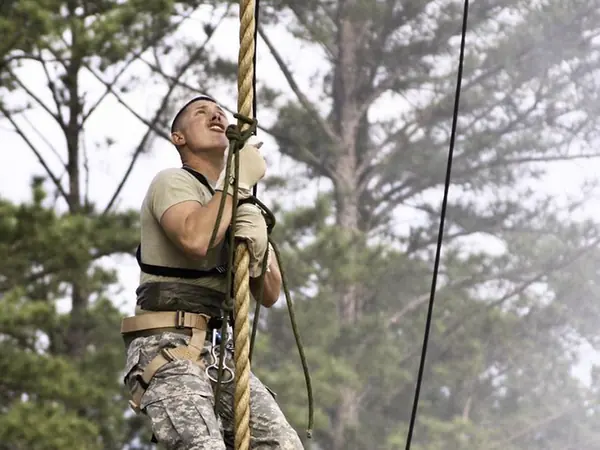
Representative photo. Check the retailer listing for the exact model, color and size.
Photo: Prusik climb by Georgia National Guard, CC BY 2.0
A boot-mounted rope ascender that turns every step into upward progress.
The CMI foot ascender mounts to your boot and grabs the rope each time you step, so climbing a single rope feels closer to walking up stairs than pulling yourself up. For climbers who ascend SRT into big trees, a foot ascender is often the biggest energy saver in the system.
Single rope ascent is mostly about how efficiently you turn leg strength into height. With a foot ascender on one boot, every step grabs the rope and holds your gain, while your hitch or device slides up behind it. It also keeps the rope tensioned below you, so your upper system feeds smoothly without a hand dedicated to pulling slack.
Climbers who ascend 60 or 80 feet into a big tree several times a day notice the difference fast. Less arm work on the way up means more energy for the actual job: rigging, cutting and moving through the canopy.
It also helps when you change direction in the tree. Because the foot ascender keeps tension on the rope below you, your device or hitch moves more cleanly, and you spend less time fiddling with slack and more time getting to work position. Over a full day of foot ascenders and multiple climbs, the savings in arm strength are obvious.
Most climbers wear the foot ascender on one foot and a foot loop or knee ascender on the other side, combined with a chest-mounted device or hitch on the saddle. The exact setup depends on your system, and you should match it to what you have been trained on. Strap it securely to a stiff-soled boot so it does not roll off when you step.
Check the rope diameter range and compatibility in CMI's instructions before using it on your line. Practice low to the ground until the stepping rhythm feels natural and the release is second nature, especially for the moment you transition from ascent to work position.
Before you leave the ground, check how the rope runs from your upper device past the foot ascender. Twists in the line or a strap that rides up your boot will make each step awkward. A few practice steps low down sort that out quickly.
When you reach your tie-in, many climbers flip the foot ascender off the rope so it does not catch on branches while they work. Get comfortable doing that with gloves on.
A foot ascender is an ascent aid, not your life support. You must always be connected to your saddle through your primary system, and that system must meet the applicable standard and be used per ANSI Z133 and the manufacturer's instructions. Get training before you add any mechanical ascender to your climbing.
Inspect before each use for wear on the cam teeth, cracks, a weak spring, and frayed or cut straps. Clean out grit and sap, which can stop the cam from biting. Retire it if you see damage. Pair it with an arborist foot loop or a knee ascender for a full rope walking setup.
| Type | Foot ascender |
|---|---|
| Mount | Strapped to the boot |
| Side | Left or right foot (check listing) |
| System | Single rope technique (SRT) |
| Brand | CMI |
| Use | Ascent aid, not primary life support |
Specs are from the manufacturer's published figures where available. Confirm against the product listing before you buy.
Most climbers wear it on their dominant foot, but it is personal preference. Order the version that matches the foot you plan to use.
Check CMI's instructions for compatible rope diameters and types before use.
No, but it makes ascents much more efficient, especially on long climbs.
Pairs well with
Gap Arborist Supply
A simple adjustable foot loop that helps you stand and push while ascending.
SAKA
A knee ascender for efficient rope walking that folds away once you are up.
Climbing Technology
A foot ascender that makes SRS rope walking faster and easier.
Climbing Technology
A replacement foot strap that keeps a Quick Step snug on your boot.
Climbing Technology
An ascender that mounts on your spur for rope ascent on removals.
Edelrid
A foot-worn ascent aid from Edelrid for faster rope climbing.
Notch
A foot ascender from Notch for faster, easier SRS climbing.
Petzl
A bungee knee system that speeds up rope walking with a foot ascender.
CMI Foot Ascender$95