Kask
Kask Super Plasma Climbing Helmet
A popular climbing helmet for arborists who want comfort, airflow and accessory options.
Typical $160
 Helmets
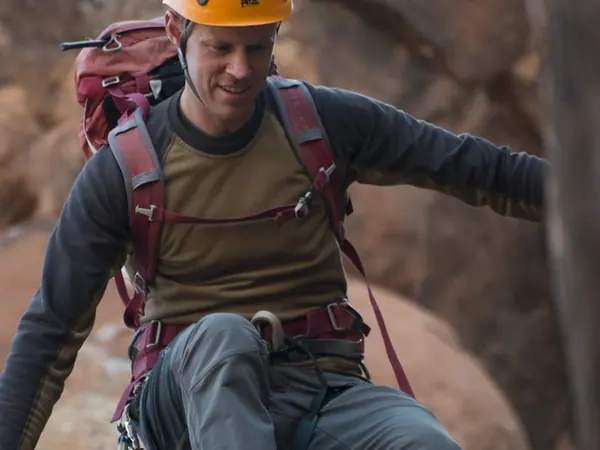
Representative photo. Check the retailer listing for the exact model, color and size.
Photo: Arches Canyoneering by ArchesNPS, Public domain
A forestry helmet system with visor and earmuffs for felling, bucking and ground saw work.
The Husqvarna Technical forestry helmet is a Husqvarna helmet system that pairs a hard hat with a mesh visor and earmuffs, so head, face and hearing protection go on in one piece. It is built for chainsaw work on the ground: felling, bucking, limbing and clearing.
Running a chainsaw means dealing with three hazards at once: things falling on your head, chips flying at your face and noise loud enough to damage hearing over time. A forestry helmet system handles all three, so you are not juggling a hard hat, safety glasses and a separate set of muffs.
The Husqvarna Technical is aimed at ground saw work. Felling, bucking logs, limbing brush and clearing lots are where it fits best. The mesh visor stops chips and small debris while letting air through, and the earmuffs attach to the helmet so they sit at the right pressure every time you put it on.
That makes it a good fit for crews that do a lot of land clearing, storm cleanup and firewood work, where people spend hours running a saw at ground level.
A helmet you do not wear does not protect you, so comfort matters. The adjustable headband lets you snug the fit before you start the saw and loosen it when you take a break. Vents in the shell help on hot days, and the visor and muffs flip up when you step off the saw to drag brush or talk to the crew.
Many saw operators still wear safety glasses under the mesh visor. A mesh screen stops chips but not fine dust or splinters at every angle. Add glasses from our safety gear range for full eye protection.
Check the seal of the earmuffs against your head with the helmet on. Glasses frames and hair can break the seal, and that lets in more noise than you think.
Forestry helmets like this are classic ground worker hard hats. Climbers usually prefer a dedicated climbing helmet with a chin strap that keeps the helmet on during a fall or swing, such as the Petzl Vertex Vent or Kask Super Plasma. Check what your employer requires for each role on the crew.
If you are a homeowner or part-time saw user, a Husqvarna hard hat system like this is one of the simplest ways to cover the basics in one purchase.
A Husqvarna hard hat system also works well for crew members who split time between the saw, the chipper and dragging brush, since the visor and muffs move out of the way quickly.
Keep the helmet out of direct sun in the truck cab when you can, wipe off bar oil and sap, and check the shell for cracks and the suspension for wear. Replace the earmuff cushions when they flatten or crack, since a poor seal lets noise in.
Choose a helmet that meets the standard your employer and ANSI Z133 require for the work you do, fit it per the manufacturer's instructions, and replace it after a significant impact or when it reaches the maker's service life.
Write the date you started using the helmet inside the shell so you know when to replace it.
| Type | Forestry helmet system |
|---|---|
| Brand | Husqvarna |
| Face protection | Mesh visor |
| Hearing protection | Integrated earmuffs |
| Fit adjustment | Adjustable headband |
| Typical price | About $90 |
Specs are from the manufacturer's published figures where available. Confirm against the product listing before you buy.
It is designed mainly for ground saw work. Climbers usually choose a climbing-style helmet with a secure chin strap. Check your employer's requirements.
Many operators wear safety glasses under the mesh visor for better protection from fine dust and splinters.
Husqvarna sells replacement parts for its helmet systems. Check that parts match your helmet model.
Pairs well with
Kask
A popular climbing helmet for arborists who want comfort, airflow and accessory options.
Petzl
A ventilated work-at-height helmet with a secure fit for long days in the canopy.
Pfanner
A fully integrated arborist helmet with built-in hearing and face protection.
Kask
A hi-viz climbing-style work helmet for arborists working near traffic and machines.
Husqvarna
A forestry helmet system with visor, ear muffs, and quick wheel ratchet fit.
Petzl
A vented, high-visibility Vertex helmet for climbers who need to be seen.
Husqvarna Technical Forestry Helmet$90