ART
ART Positioner Replacement Cam
A genuine replacement cam to keep your ART Positioner lanyard adjuster working right.
Typical $45
 Rope Grabs
Representative photo. Check the retailer listing for the exact model, color and size.
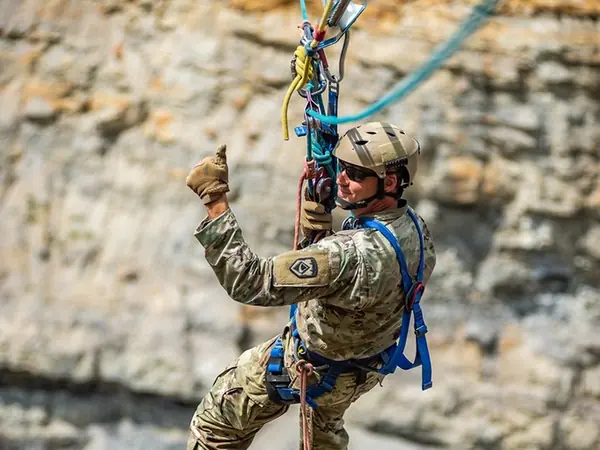
Photo: Georgia Guardsman in the Best Ranger Competition by Georgia National Guard, CC BY 2.0
A simple cam-style rope grab for adjusting a lanyard or positioning line.
The Climb Right rope grab is a cam-style device for gripping rope on a lanyard or a secondary positioning line. Slide it to adjust, load it and it holds, so you can set your distance from the stem with one hand.
Most climbers use a rope grab like this on a rope lanyard, so they can shorten up to lean back on a spar or let out length to reach around a big stem. Gripping rope with a cam is faster than retying a hitch and easier with gloves on.
It also works for holding a light load on a short line or tensioning a tag line on the ground.
On spur work and removals, being able to snug up your position quickly matters. A cam grab lets you take up slack as the stem narrows without stopping to retie anything, which keeps the job moving and your hands on the work.
Match the device to the rope diameter it is marked for. A cam on rope that is too thin can slip, and on rope that is too fat it may not close properly. Life-support gear has to meet the applicable standard and the manufacturer's instructions, get inspected before every climb, and be used only by trained climbers.
If you want a device that is built into a complete lanyard, compare it with the Petzl Zillon.
Before each climb, check the cam teeth for wear and packed debris, make sure the spring returns the cam crisply, and look for cracks or deformation on the body and the attachment hole. Test it on the ground with full weight before going up, and retire it if it ever slips under load.
| Type | Cam rope grab |
|---|---|
| Use | Lanyard adjustment, work positioning |
| Rope range | See manufacturer markings |
Specs are from the manufacturer's published figures where available. Confirm against the product listing before you buy.
Only if the manufacturer rates it for that use. Most lanyard rope grabs are for work positioning, not as the main climbing system.
Use rope within the diameter range marked on the device and listed in the instructions.
Pairs well with
ART
A genuine replacement cam to keep your ART Positioner lanyard adjuster working right.
Petzl
A compact Petzl rope grab for adjusting a tree-care positioning lanyard.
ART
Replacement release lever for the ART Positioner lanyard adjuster.
ART
Mechanical lanyard adjuster with a release lever for fast length changes.
Gibbs
Mechanical adjuster for shortening and lengthening a positioning lanyard.
Gap Arborist Supply
A lightweight snap for running a prusik-style adjuster on your lanyard.
Buckingham
Light 7 ft Dyneema strap used with fliplines and rope grabs.
Rock Exotica
A rope grab for backup and progress capture on a fixed line.
Climb Right Rope Grab$60