Gap Arborist Supply
Tree Bracing Rods
Threaded rods for bracing weak unions and split stems in trees.
Typical $25
 Cabling & Bracing
Representative photo. Check the retailer listing for the exact model, color and size.
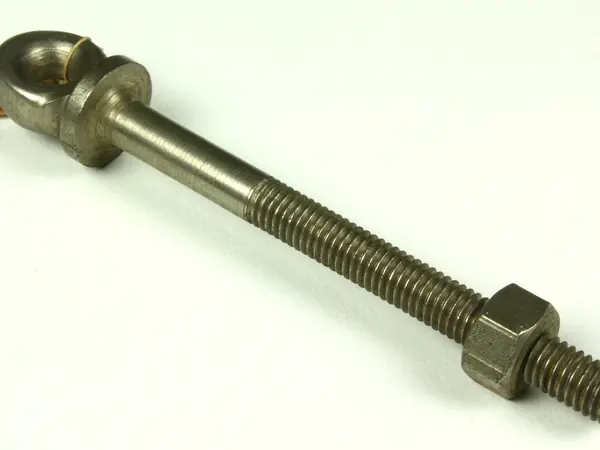
Photo: Eye Bolt by Clearly Ambiguous, CC BY 2.0
A heavy forged ring for joining cables in tree support systems.
This large forged steel rigging ring gives you a solid central connection point when a cabling layout calls for several cables to meet. It is a simple piece of hardware, but in a support system it carries real load, so it has to be the right ring for the job.
Most tree cabling is point to point: one cable between two leads. On multi-stem trees, some arborists use a hub layout where cables from several leads meet at a central ring. The ring lets each cable pull in its own direction while sharing the load across the crown.
A forged ring holds its shape better than a welded or bent ring, which matters when it sits in the tree for years. Size the ring and the cable together so thimbles and terminations seat properly, and follow the cabling hardware maker's ratings for every component in the system. Browse matching parts in cabling and bracing.
Hub layouts also reduce the number of anchor points drilled into each lead compared with running many separate cables. That said, the layout still has to suit the tree. A qualified arborist should look at defects, lead angles and target areas before deciding on a ring-based system.
Cabling should be designed and installed by a qualified arborist following ANSI A300 support system practice. Keep all hardware in the system rated and compatible, and avoid mixing unknown parts.
Check installed rings on every inspection cycle for wear where cables bear, corrosion, and any sign of distortion. Replace a ring that shows wear or bending rather than trying to judge how much strength is left.
Keep records of what was installed, where, and when, so the next inspection has something to compare against. Cabling hardware is a long-term commitment for the tree and the client, and a ring that looked fine five years ago can tell a different story today.
| Material | Forged steel |
|---|---|
| Size | 3 in (large) |
| Use | Tree cabling and bracing connections |
Specs are from the manufacturer's published figures where available. Confirm against the product listing before you buy.
It serves as a central connection point where several support cables meet, as in a hub layout on a multi-stem tree.
No. Use only rings sold and rated for life support when climbing. This ring is cabling and rigging hardware.
Pairs well with
Gap Arborist Supply
Threaded rods for bracing weak unions and split stems in trees.
Gap Arborist Supply
Galvanized steel strand for general-purpose, non-critical uses.
Gap Arborist Supply
Extra-high-strength galvanized steel strand for tree support systems.
Gap Arborist Supply
A 3/8 in eye bolt for anchoring light cabling systems in trees.
Gap Arborist Supply
A galvanized lag eye for anchoring light cable systems in small to medium limbs.
Gap Arborist Supply
Hook-style lag anchors for cabling leads with a cable that wraps the J.
Gap Arborist Supply
Ship auger bit for drilling clean holes for tree cabling and bracing hardware.
Gap Arborist Supply
Ship auger bit for drilling clean holes for tree cabling and bracing hardware.
Large 3 in Forged Steel Rigging Ring$14