Gap Arborist Supply
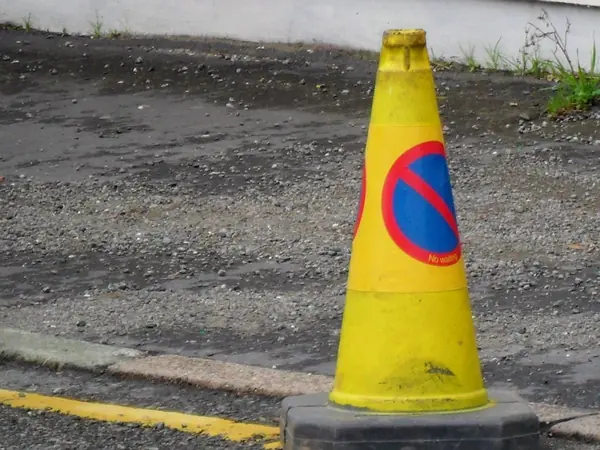
18 in. Drop Zone Cone
An 18-inch cone that tells everyone on site where not to stand.
Typical $22
 Traffic Control
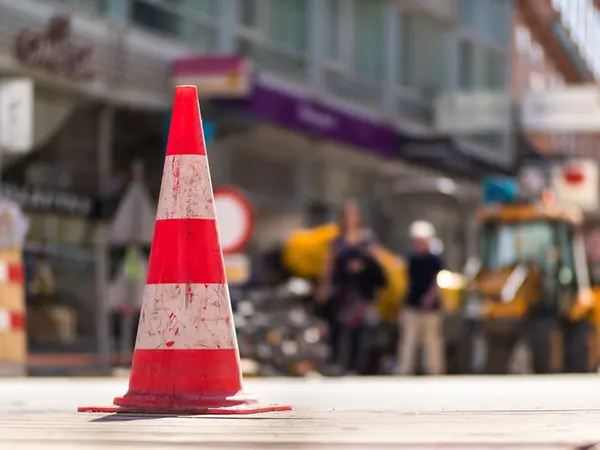
Representative photo. Check the retailer listing for the exact model, color and size.
Photo: Traffic cone by grassrootsgroundswell, CC BY 2.0
A 36 inch Road Closed sign for full street closures on removals and crane jobs.
A 36 inch road closed sign tells drivers well ahead of the work that the street is shut, not just narrowed. Tree crews put it up for removals, crane picks, and chipper setups that take the full roadway.
Some jobs cannot be done with a lane shift. A crane parked across the street, a big spar coming down over the road, or a chip truck and loader filling both lanes all mean the road is shut while you work. A Road Closed sign at each end of the work area, backed up with cones or barricades, tells drivers to turn around before they reach the hazard. It is also the sign that keeps a driver from following a GPS route straight into your landing zone.
Set the sign where drivers can see it with time to react and still have a place to turn. Keep it upright, clean, and out of the drop zone, and pick it up as soon as the road reopens so drivers keep trusting your signs.
Closing a public road usually takes a permit and sometimes a police detail. Sign placement and spacing should follow the MUTCD and your state and local rules, and ANSI Z133 expects a work zone plan whenever traffic is affected. Flaggers need training. Two signs and a stack of cones in the truck mean you are ready when a job turns out to need a closure.
A sign stand keeps a 36 inch sign steady in wind. See our traffic control gear for stands, cones, and other work zone signs.
| Size | 36 in. |
|---|---|
| Legend | ROAD CLOSED |
| Use | Full road closures |
Specs are from the manufacturer's published figures where available. Confirm against the product listing before you buy.
Usually, yes. Check with the city, county, or state agency that owns the road before you plan a closure.
No. A closure normally needs signs and channelizing devices at each approach, laid out to MUTCD and local requirements.
Pairs well with
Gap Arborist Supply
An 18-inch cone that tells everyone on site where not to stand.
Gap Arborist Supply
Advance warning for drivers so your crew has room to work along the road.
Gap Arborist Supply
Breathable hi viz green mesh vest so drivers and operators see your ground crew.
Gap Arborist Supply
Yellow barricade tape for marking drop zones and keeping bystanders out.
JBC
A 36 inch advance warning sign for roadside tree and utility work.
Plasticade
A plastic Tree Work Ahead warning sign for roadside crews.
JBC 36 in. Road Closed Sign$95