Gap Arborist Supply
48 in. Tree Work Ahead Sign
Advance warning for drivers so your crew has room to work along the road.
Typical $129
 Traffic Control
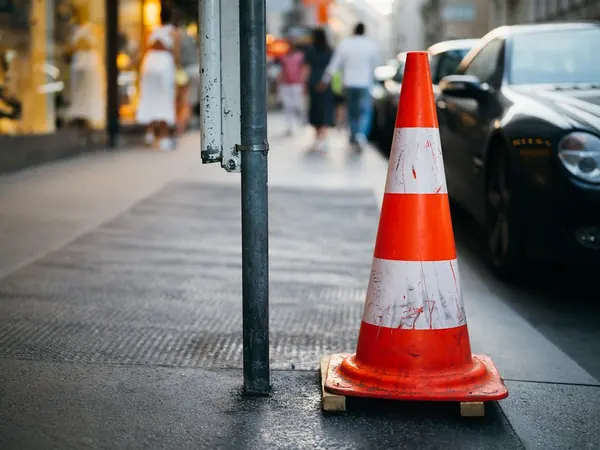
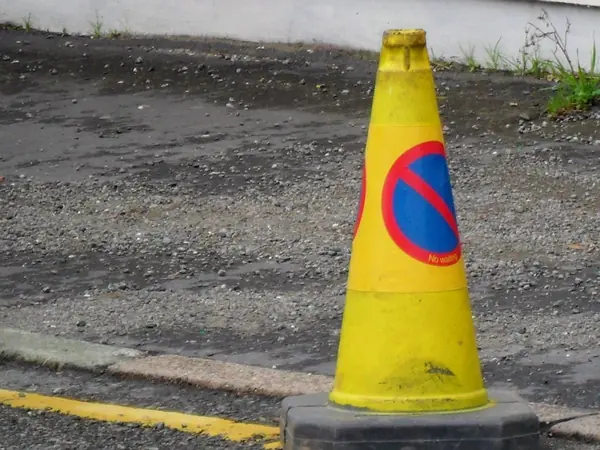
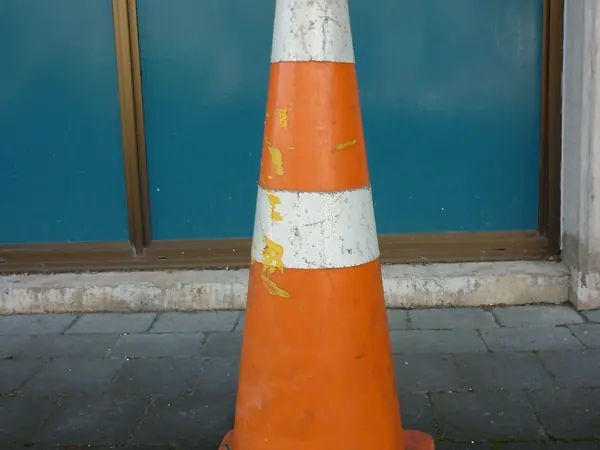
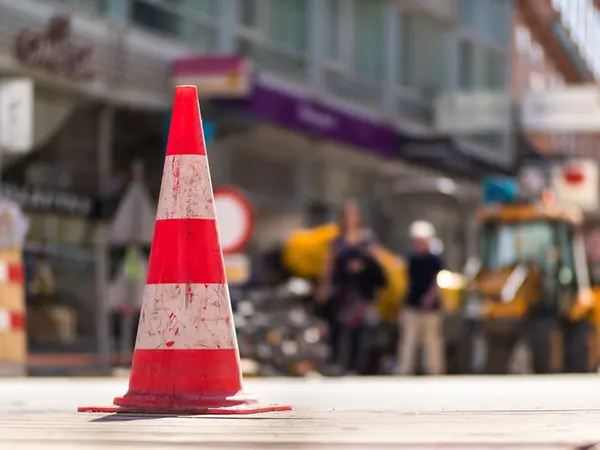
Representative photo. Check the retailer listing for the exact model, color and size.
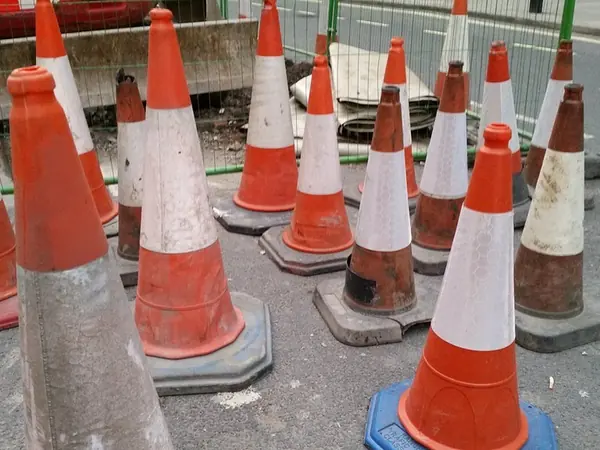
Photo: Traffic cones by oatsy40, CC BY 2.0
An 18-inch cone that tells everyone on site where not to stand.
Drop zone cones mark the area under a climber or aerial lift where cut wood, tools and debris can land. An 18 in. cone is tall enough to see over brush and short enough to stack a handful behind the seat of the truck.
Every climb and every bucket job has a drop zone: the ground where cut pieces, deadwood, dropped tools and rigging can come down. It is bigger than most people think. Pieces bounce, roll on slopes and kick off limbs on the way down. ANSI Z133 expects the crew to establish and control that area, and cones are the simplest way to make it visible.
Set the cones before the first cut, not after someone wanders under the tree. A ring of four to eight cones around the drip line, extended downhill and in the direction of any lowering, gives the ground crew a clear boundary and tells homeowners and passersby where they cannot go.
Drop zone cones also protect the climber. A ground worker who is not where the climber expects is the reason many cuts get paused or rushed, and a clear boundary takes that guesswork out of the job.
Cones only work if the crew respects them. Agree on simple commands between climber and ground: nobody enters the zone until the climber gives the all clear, and the climber stops cutting when someone calls in. Keep the chipper, trucks and brush piles outside the cones where you can.
Move cones as the job moves. When you rig a big limb out over a driveway, the landing area may be well past the original ring. Re-set cones for each phase so the marked zone matches the real one.
Brief the client before work starts. Homeowners often want to watch, and pets and kids wander. Show them the cones, explain that the area inside is off limits until the crew says otherwise, and ask them to keep animals indoors.
On jobs along a street or sidewalk, drop zone cones are part of a bigger setup. You may also need advance warning signs like a tree work ahead sign, channelizing devices and flaggers, depending on local rules and the traffic control plan for the road. Smaller 18 in. cones are good for marking the work area itself, but check what your jurisdiction requires for lane closures, which often calls for taller cones or drums.
Ground crew working near traffic should wear high-visibility apparel so drivers see people, not just cones.
At the end of the day, pick up every cone. Cones left behind on a street or lawn become a hazard of their own and are an easy way to lose a set.
Hose off sap and mud so the color stays bright, and replace cones that are crushed, faded or missing reflective collars if your set has them. Stack them in a corner of the truck bed with a strap so they do not blow out on the highway.
A set of cones is cheap, so replace them before they look tired. Faded, dirty cones blend into the background and stop doing their job.
| Height | 18 in. |
|---|---|
| Color | Orange |
| Use | Drop zone and work-area marking |
| Storage | Stackable |
| Typical set | 4 to 8 cones per job |
Specs are from the manufacturer's published figures where available. Confirm against the product listing before you buy.
Most residential jobs use four to eight cones to ring the work area. Larger removals and roadside work need more.
Often not. Many jurisdictions require taller cones or drums for road work, so check the traffic control rules for your area.
Large enough to contain anything that can fall, bounce or roll, including rigged pieces. Extend it downhill and in the lowering direction.
Pairs well with
Gap Arborist Supply
Advance warning for drivers so your crew has room to work along the road.
Gap Arborist Supply
Breathable hi viz green mesh vest so drivers and operators see your ground crew.
Gap Arborist Supply
Yellow barricade tape for marking drop zones and keeping bystanders out.
JBC
A 36 inch Road Closed sign for full street closures on removals and crane jobs.
JBC
A 36 inch advance warning sign for roadside tree and utility work.
Plasticade
A plastic Tree Work Ahead warning sign for roadside crews.
18 in. Drop Zone Cone$22