Courant
Courant Kalimba Bubblegum 11.9 mm Climbing Rope
A supple 11.9 mm 24-strand climbing line in a high-visibility pink colorway.
Typical $289
 24-Strand Rope
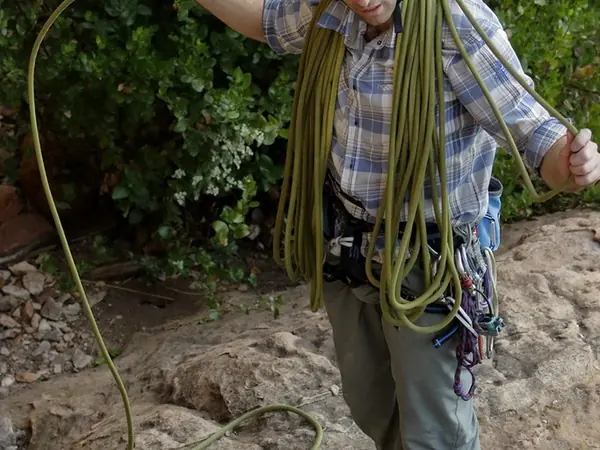
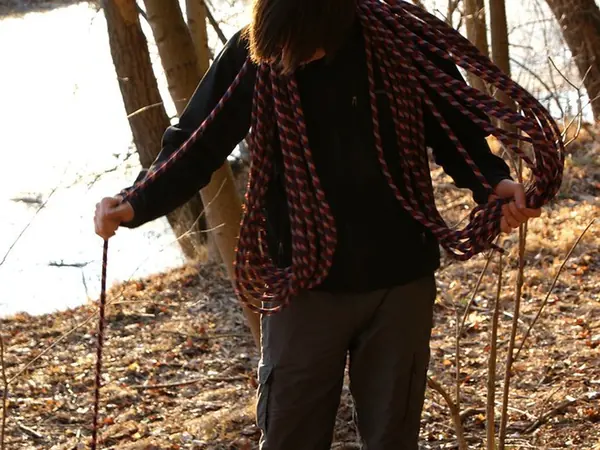
Representative photo. Check the retailer listing for the exact model, color and size.
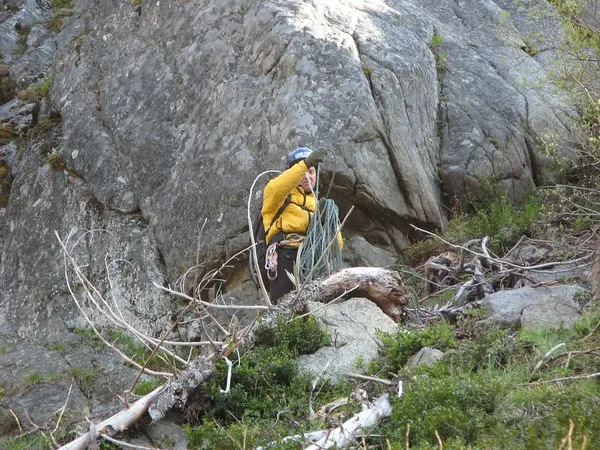
Photo: Walt coiling the rope at the summit by Tristan Higbee, CC BY 2.0
An 11.8mm Samson climbing line for SRS and MRS work.
Samson Voyager climbing rope is an 11.8mm line for arborists who split their time between stationary rope (SRS) and moving rope (MRS) climbing. The diameter suits many current SRS devices and gives a solid feel in hand.
At 11.8 mm, Voyager sits in a sweet spot for many climbers: thin enough to stay light on long ascents, thick enough to grip well in hand and with a friction hitch. It pairs naturally with mechanical SRS devices and rope wrenches built around that range.
Always check the device maker's approved rope list and test your system low before climbing. If you use a friction hitch, choose a hitch cord sized for 11.8 mm rope rather than one set up for 1/2 in line.
Whatever line you choose, set it up the same way every time: a clean termination, a hitch or device you have tested on that rope, and a stopper knot in the tail. Consistency is what makes a rope feel predictable at height, and it makes problems easier to spot.
Pick a length that covers twice the height of your typical tie-in for MRS, or the full height plus tail for SRS. Compare similar lines in 24-strand climbing rope.
Keep the rope in a bag, away from fuel, bar oil, and sunlight, and run it through your hands before each climb looking for cuts, glazing, and flat or stiff spots. Life-support gear must meet the applicable standard (ANSI Z133 and the manufacturer's instructions), be inspected before every use, and be used only by trained climbers.
| Brand | Samson Rope |
|---|---|
| Diameter | 11.8 mm |
| Primary use | SRS and MRS tree climbing |
Specs are from the manufacturer's published figures where available. Confirm against the product listing before you buy.
Its 11.8 mm diameter suits many SRS devices. Check your device's approved rope list to be sure.
Retire it after cuts, core damage, glazing, chemical contamination, or a serious shock load, or when the manufacturer's guidance says to.
Pairs well with
Courant
A supple 11.9 mm 24-strand climbing line in a high-visibility pink colorway.
Yale Cordage
Yale's 11.7 mm 24-strand climbing line in the Poison Moon colorway.
Petzl
A 12.5 mm arborist line made to run in Petzl mechanical friction devices.
All Gear
A 24-strand 11.7mm climbing line in a 200 ft length for taller trees.
Marlow
A compact 11.5mm arborist climbing line from Marlow for hitch and device climbing.
Marlow
A low-stretch 11.7mm Marlow line in lime and gray for SRS and doubled-rope work.
Marlow
An 11.8mm low-stretch Marlow climbing line in blue and orange.
Marlow
An 11.8mm low-stretch Marlow climbing line in purple and lime.
Samson Voyager 11.8mm Climbing Rope$259