Maasdam
Maasdam Continuous Rope Puller Replacement Handle
A replacement handle to get a Maasdam continuous rope puller back to work.
Typical $30
 Mechanical Advantage
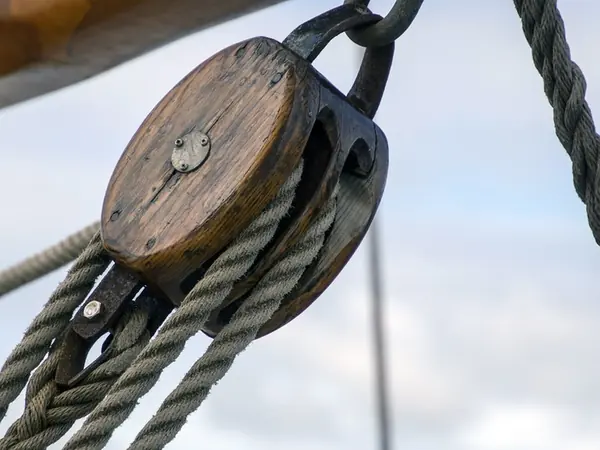
Representative photo. Check the retailer listing for the exact model, color and size.
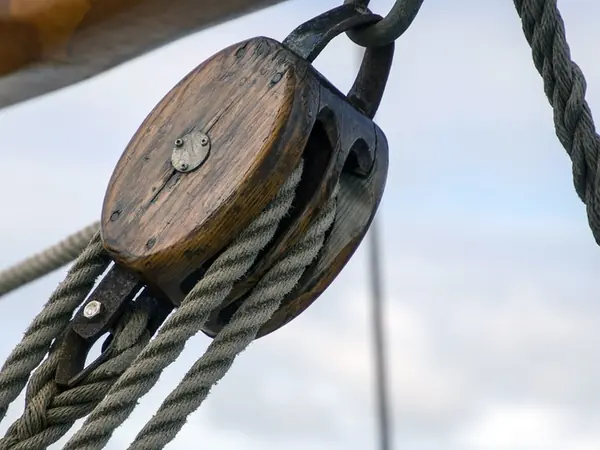
Photo: Pulley Block Equipment Rigging Edited 2020 by chimpwithcan, CC BY 2.0
A compact double pulley with becket for building light haul systems.
The Petzl JAG is a double pulley with a becket attachment point, built for setting up compact mechanical advantage systems. Arborists use it for tensioning lines, small pulls and haul setups where a big fiddle block would be overkill.
The JAG is small enough to live in a gear bag and quick to set up. Paired with another pulley and a length of rope, it makes a compact system for tensioning a speedline, snugging a guy line, or putting a controlled pull on a small leader before a cut.
The becket gives you a place to tie off the rope end or attach a second pulley, which is how you build more advantage from a small kit. Compare it with heavier blocks in our mechanical advantage range.
The JAG is a small pulley. It is not a substitute for a rigging block when you are catching and lowering wood, because the dynamic forces in rigging are far higher than a steady pull. Use it for controlled hauling and tensioning within Petzl's ratings.
Check the sheaves turn freely and the side plates are not cracked or bent, and keep it clean of sap and grit. Rigging gear is for moving wood, not for life support. Match every component to the load with a working margin, follow the manufacturer's ratings and ANSI Z133, and make sure the crew is trained in rigging before relying on it. Note when each piece went into service, so worn gear gets retired on time instead of living on the truck for years.
| Brand | Petzl |
|---|---|
| Type | Double pulley with becket |
| Rope diameter | 8 to 11 mm |
Specs are from the manufacturer's published figures where available. Confirm against the product listing before you buy.
It is an attachment point on the pulley where you tie off the rope end or clip a second pulley to build a haul system.
No. It is meant for hauling and tensioning, not for catching dynamic loads when rigging wood down.
Pairs well with
Maasdam
A replacement handle to get a Maasdam continuous rope puller back to work.
Maasdam
A rope come along that pulls any length of rope for tree and yard work.
Petzl
A small, efficient progress capture pulley for haul systems and SRT tending.
Gap Arborist Supply
A rope-and-block pulling system with 120 ft of line, rigged and ready for the truck.
Gap Arborist Supply
A rope-and-block pulling system with 150 ft of line, rigged and ready for the truck.
Gap Arborist Supply
A rope-and-block pulling system with 75 ft of line, rigged and ready for the truck.
Gap Arborist Supply
A pair of fiddle blocks without rope, for crews who want to choose their own line.
Maasdam
Service parts to bring a worn Maasdam rope puller back into work.
Petzl JAG Double Pulley$75