

ART
ART Ropeguide Twinline
A roller friction saver from ART that protects bark and rope at the tie-in.
Typical $200
 Friction Savers
Representative photo. Check the retailer listing for the exact model, color and size.
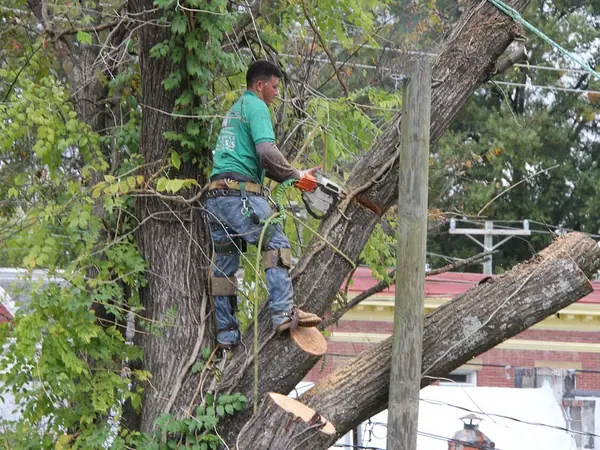
Photo: Tree Pruning in RVA (Carytown, Virginia) by Gamma Man, CC BY 2.0
A ring-style friction saver from Yale for clean, retrievable doubled-rope tie-ins.
The Yale R.I.N.G. friction saver is a ring-style cambium saver: a length of rope with a ring at each end that sits in the tie-in crotch so your climbing line runs through metal instead of over bark. It is a simple, retrievable setup for doubled-rope climbers.
Throw a line over the crotch, pull the friction saver up with the small ring leading, and run your climbing line through both rings. The line then bears on the rings instead of the bark, so the tree keeps its cambium and your rope keeps its cover. When the climb is done, a pull on the correct leg brings the small ring back through the large one and the whole thing comes down.
That retrieval step is the part to practice. Rig it wrong and the saver stays in the tree. Set one up at shoulder height and run through it until it is second nature. For other styles, including adjustable and pulley savers, see our friction savers.
A friction saver is part of your life-support system. Before each climb, check the rope body for cuts, glazing, and stiff spots, look at the splices or sewn terminations, and check the rings for grooves or burrs. Retire it if it has been shock loaded or shows damage.
Pick a tie-in that is sound and big enough for the load, and keep the rings from levering against the stem. Use it within ANSI Z133 practice and Yale's instructions, and get trained on doubled-rope climbing before relying on it.
| Type | Ring friction saver |
|---|---|
| Brand | Yale Cordage |
| System | Doubled rope (MRS/DdRT) |
| Retrieval | From the ground |
Specs are from the manufacturer's published figures where available. Confirm against the product listing before you buy.
It protects the bark at the tie-in, reduces wear on your climbing rope, and usually makes the advance smoother than running rope over bare wood.
Pull the leg that draws the small ring back through the large ring, as described in the maker's instructions. Practice it on the ground first.
Pairs well with
ART
A roller friction saver from ART that protects bark and rope at the tie-in.
CMI
A tough webbing anchor sling for setting tie-ins and anchors around stems and limbs.
Gap Arborist Supply
An adjustable rope friction saver that fits small leaders and big unions alike.
Gap Arborist Supply
A crane tie-in assembly with connectors for climbers working off a crane.
Gap Arborist Supply
A dedicated climber connection for crane-assisted tree work.
Buckingham
A Buckingham friction saver that protects the tree and your climbing line.
Yale R.I.N.G. Friction Saver$95



