Gap Arborist Supply
2-in-1 Wire Core Flipline Kit
A ready-to-climb wire core flip line kit with two legs and an adjuster.
Typical $165
 Lanyard Kits
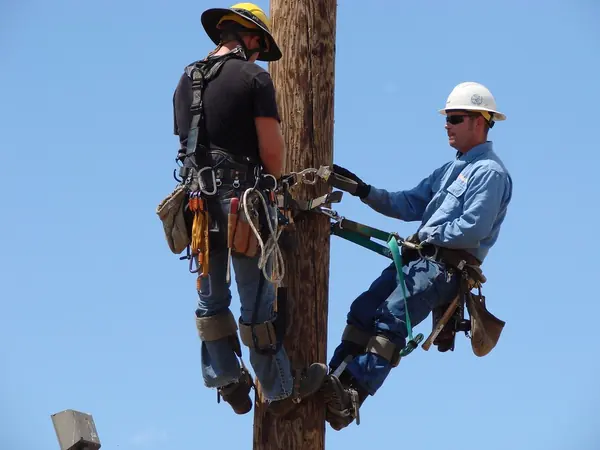
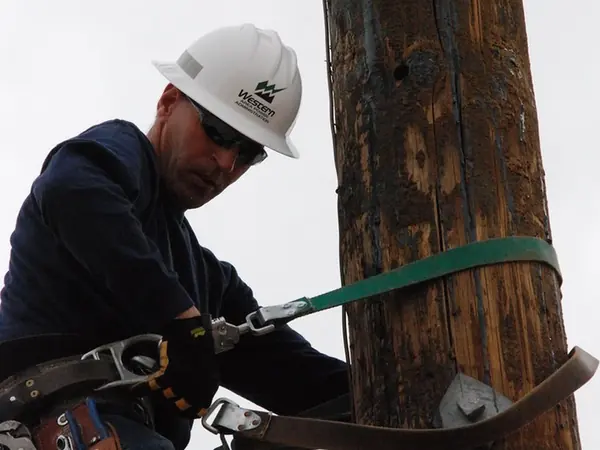
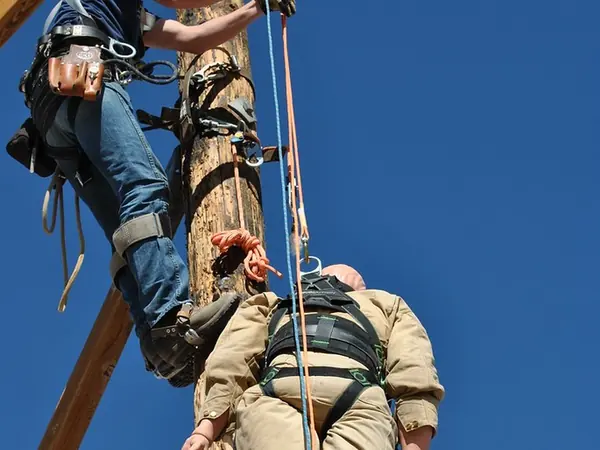
Representative photo. Check the retailer listing for the exact model, color and size.
Photo: Wood pole rescue by Western Area Power Admin, CC BY 2.0
An all-rope Sterling flipline with a classic prusik adjuster.
The Sterling TriTech positioning lanyard kit with prusik adjuster is a light all-rope flipline that adjusts with a friction hitch. It is a simple, proven setup that many climbers learn on and keep using.
A prusik adjuster is a loop of hitch cord tied around the lanyard rope and clipped to your saddle. Load it and it grips; break it free and it slides. It is light, has no moving parts, and the cord is inexpensive to replace when it wears.
This kit works well as the everyday lanyard for pruning and spur climbing. It is a good choice for newer climbers learning how to manage a flipline.
Dress the hitch neatly and test it at ground level. Replace the hitch cord when it glazes, fuzzes, or slips. Inspect the lanyard rope for cuts and stiff spots. Browse other lanyard kits if you want wire core or a mechanical adjuster.
Hitch cord diameter matters. A cord that is too thick for the lanyard rope will slip; one that is too thin will bite and be hard to release. A matched kit avoids that problem from day one.
Learn to tie and dress the hitch yourself so you can replace the cord in the field when it wears. A properly set prusik should grip under load and release smoothly when you push the hitch along the rope.
Life-support gear must meet the applicable standard (ANSI Z133 and the manufacturer's instructions), be inspected before every climb, and be used only by trained climbers.
| Rope | Sterling TriTech |
|---|---|
| Adjuster | Prusik-style hitch |
| Type | Positioning lanyard kit |
Specs are from the manufacturer's published figures where available. Confirm against the product listing before you buy.
Replace it whenever it shows glazing, cuts, heavy fuzzing, or starts slipping. Hitch cord wears faster than the lanyard rope.
Yes. A prusik-adjusted all-rope lanyard is simple to understand and inspect, which makes it a common first lanyard.
Pairs well with
Gap Arborist Supply
A ready-to-climb wire core flip line kit with two legs and an adjuster.
Petzl
An adjustable work-positioning lanyard with a hook connector for quick anchors.
Petzl
Petzl's adjustable positioning lanyard built for tree care and all-day spar work.
Gap Arborist Supply
A wire-core flipline with a prusik adjuster for removals and spur climbing.
Samson
An all-rope positioning lanyard kit in Hi-Vee for everyday tree work.
Petzl
A steel-core adjustable flipline with an integrated adjuster for removal climbers.
Sterling
An all-rope Sterling positioning lanyard kit for everyday climbing work.
Sterling
A Sterling rope lanyard paired with the ART Positioner mechanical adjuster.
Sterling TriTech Positioning Lanyard Kit with Prusik Adjuster$129