Petzl
Petzl GriGri Belay Device
Petzl's assisted-braking belay device for single ropes 8.5 to 11 mm.
Typical $109
 Ascent & Descent
Representative photo. Check the retailer listing for the exact model, color and size.
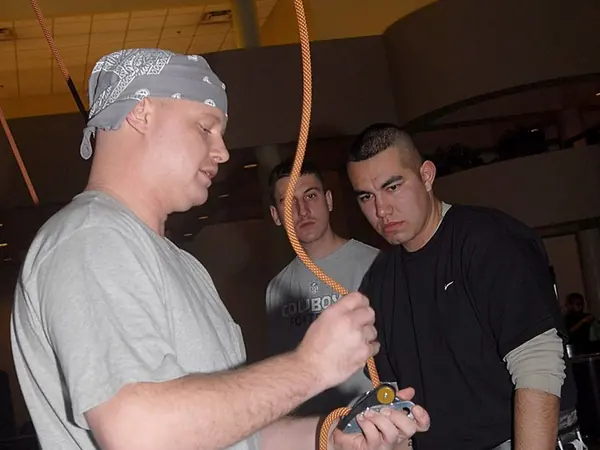
Photo: Georgia Guardsman in the Best Ranger Competition by Georgia National Guard, CC BY 2.0
A double-handled ascender built by Petzl for efficient rope climbing in trees.
The Petzl ASCENTREE is a double-handled ascender designed for tree care, giving you two grip positions so you can push and pull more efficiently on long ascents. It is a common choice for climbers building a fast SRT ascent system.
On a long SRT ascent, your hands and forearms usually give out before your legs. A double handle lets you change grip, push with both hands, and keep the device square on the rope, which smooths out the stroke and saves energy.
The ASCENTREE is often run as the upper device in a rope-walking or frog-style system, with a foot ascender below. That setup puts most of the work in your legs and gets you into the canopy quickly.
Because it is built for tree work, the ASCENTREE is meant to sit well in a climber's system rather than a caver's or rope-access setup. Many climbers like it for long access climbs on big trees where a single handle wears their grip out.
Check Petzl's instructions for compatible rope diameters and approved configurations, and keep the device connected to your saddle with a suitable tether. Compare other options in ascent and descent gear.
An ascender is not a descent device. Have your descent and changeover worked out before you leave the ground, practice low, and inspect the cams for wear and debris. Life-support gear must meet the applicable standard, follow ANSI Z133 and the manufacturer's instructions, and be inspected before every climb. Get trained before you rely on it.
Keep the cams clean of sap and grit, and check the teeth for wear. A worn cam can slip on a muddy or icy rope.
| Brand | Petzl |
|---|---|
| Type | Double-handled ascender |
| Use | Ascending on a fixed rope |
Specs are from the manufacturer's published figures where available. Confirm against the product listing before you buy.
No. It is for ascending. Change over to an approved descent device or friction system to come down.
Check Petzl's current technical notice for the approved rope range and configurations before using it with your rope.
Pairs well with
Petzl
Petzl's assisted-braking belay device for single ropes 8.5 to 11 mm.
Petzl
GriGri with anti-panic lowering and a lead/top-rope mode selector.
Petzl
Simple aluminum figure 8 descender for rappelling and lowering.
Hitch Hiker
Hitch-based mechanical device for smooth MRS climbing.
Petzl
Petzl's mechanical prusik for MRS tree climbing.
Notch Equipment
An adjustable rope wrench for SRS climbers who want to dial friction to the rope.
Petzl ASCENTREE Double-Handled Ascender$149