Petzl
Petzl GriGri Belay Device
Petzl's assisted-braking belay device for single ropes 8.5 to 11 mm.
Typical $109
 Ascent & Descent
Representative photo. Check the retailer listing for the exact model, color and size.
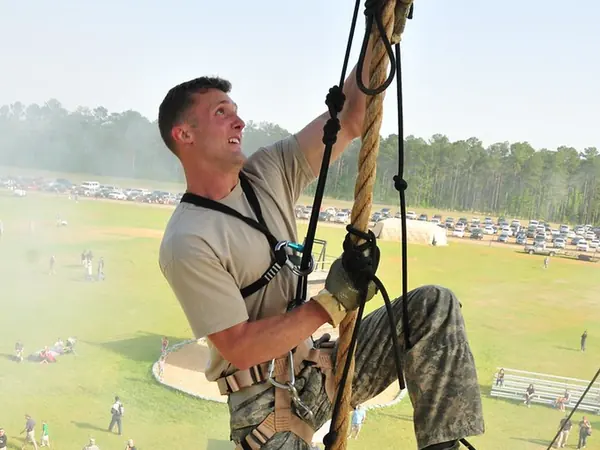
Photo: Hot day in technical rescue training by Grand Canyon NPS, CC BY 2.0
A large stainless figure 8 with ears for lowering and rescue descents.
The Big 8 stainless steel rescue descender is a large figure 8 with ears, made in stainless steel rather than aluminum for better wear resistance. It suits lowering, rope access practice and aerial rescue drills where the device sees a lot of rope.
This is the stainless steel version of the big rescue 8. The aluminum version is lighter, but rope running fast over aluminum wears grooves into it, especially when the rope is dirty. Stainless steel resists that wear and holds up better on a device that gets used for training, lowering a lot of loads, or living in a rescue kit in the truck.
The trade-off is weight and heat. Steel is heavier to carry, and on a long fast descent the device gets hot, so control your speed. Compare it with other devices in our ascent and descent section.
Many crews keep a steel 8 in the aerial rescue bag precisely because it is hard to damage. It handles rough storage in a truck box better than aluminum and still works on the day it is needed, provided someone has practiced with it.
A figure 8 is a simple device with no auto-stop, so a backup such as a friction hitch or a belay is standard practice. The ears help keep the rope from slipping over the top and forming a girth hitch, but you still need to rig it correctly.
Check for sharp edges, grooves and cracks before each use and confirm your rope diameter suits the device. Life-support use must follow ANSI Z133, the manufacturer's instructions, and your training, and the gear should be inspected before every climb. Practice rescue lowering under qualified instruction.
| Type | Rescue figure 8 descender |
|---|---|
| Material | Stainless steel |
| Design | Large 8 with ears |
| Rope range | See device markings |
Specs are from the manufacturer's published figures where available. Confirm against the product listing before you buy.
Stainless wears much more slowly under running rope, so it lasts longer in a busy rescue or training kit. It is heavier.
No. It has no automatic brake, so always use a backup and a proper lock-off when you stop.
Pairs well with
Petzl
Petzl's assisted-braking belay device for single ropes 8.5 to 11 mm.
Petzl
GriGri with anti-panic lowering and a lead/top-rope mode selector.
Petzl
Simple aluminum figure 8 descender for rappelling and lowering.
Hitch Hiker
Hitch-based mechanical device for smooth MRS climbing.
Petzl
Petzl's mechanical prusik for MRS tree climbing.
Notch Equipment
An adjustable rope wrench for SRS climbers who want to dial friction to the rope.
Big 8 Stainless Steel Rescue Descender$49