Sterling Rope
Sterling Shock Cord (By the Foot)
Stretchy accessory cord cut to length for gear tethers, bag closures and tie-downs.
Typical $1
 Tech Cordage
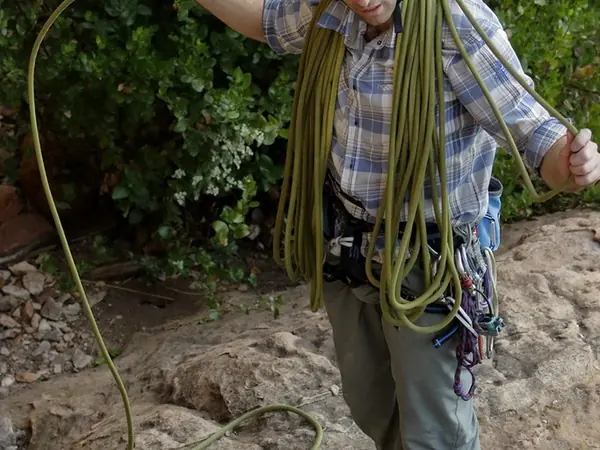
Representative photo. Check the retailer listing for the exact model, color and size.
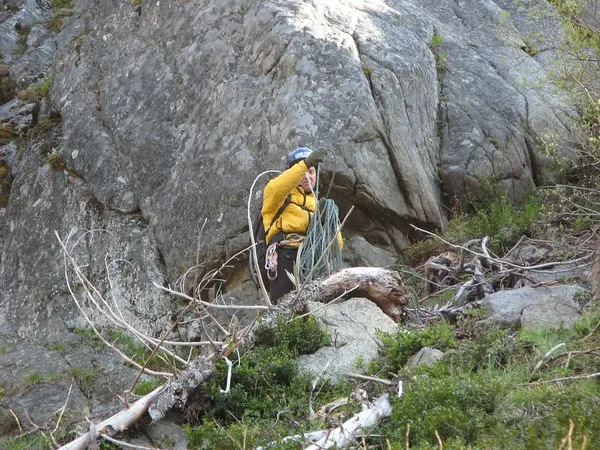
Photo: Walt coiling the rope at the summit by Tristan Higbee, CC BY 2.0
Yale's 10mm Beeline hitch cord in black, cut to the length you need.
Yale Black Beeline 10mm is a friction hitch cord sold by the foot, so you can cut exactly the length you need for split tails, prusiks and other hitches. It is the same Beeline cord Yale uses in its finished hitch cords, in a black color that is easy to tell apart from your climbing line.
Climbers tie different hitches with different lengths of cord, and the right length depends on the hitch, your climbing line and how many wraps you use. Buying by the foot lets you cut a split tail that fits your Distel or VT, or tie spare prusiks for the gear bag, without paying for sewn terminations you do not need.
A 10mm cord gives a bit more bite and durability than an 8mm, and pairs with many 11.5 to 13mm climbing lines. Test any new hitch on the ground and adjust wraps before climbing on it.
Keep track of how much cord each hitch takes once you settle on a setup, so you can cut replacements to the same length every time. Many climbers also keep a spare length of the same cord in the gear bag, so a worn split tail can be swapped out on the job instead of climbing on a tired one until the end of the day.
Tied terminations must be dressed and set correctly and checked every time you climb. Heat and wear take their toll on hitch cord faster than on rope, so inspect for glazing, flat spots and cover damage and retire it early. Finished split tails and eye-to-eyes are in tech cordage.
Life-support gear must meet the applicable standard, be used per the manufacturer's instructions and ANSI Z133, be inspected before every climb, and be used only by trained climbers.
| Diameter | 10 mm |
|---|---|
| Color | Black |
| Sold | By the foot |
| Brand | Yale Cordage |
| Product line | Beeline |
Specs are from the manufacturer's published figures where available. Confirm against the product listing before you buy.
It depends on the hitch and your rope. Many climbers start around 30 to 36 inches for a split tail and adjust after testing on the ground.
It suits many common arborist climbing lines, but test the hitch with your exact rope before trusting it aloft.
Pairs well with
Sterling Rope
Stretchy accessory cord cut to length for gear tethers, bag closures and tie-downs.
Teufelberger
An 8 mm hitch cord by the foot for building friction hitches and split tails.
Yale Cordage
Technical cord by the foot for climbers who build their own loops and rigging pieces.
Yale Cordage
A 10mm hitch cord by the foot for climbers who tie their own friction hitches.
Sterling Rope
A 9mm Sterling cord by the foot for building your own friction hitch.
Teufelberger
Teufelberger accessory cord by the foot for prusiks, tethers, and utility jobs.
Yale Cordage
Yale's 8mm Bee Line hitch cord, cut to length for your friction hitch.
Sterling Rope
11mm Sterling TriTech cut to length for custom lanyards and fliplines.
Yale Black Beeline 10mm Hitch Cord, by the Foot$2