Rock Exotica
Rock Exotica Downrigger
A rigging pulley for redirecting and managing lowering lines on removals.
Typical $160
 Blocks & Hardware
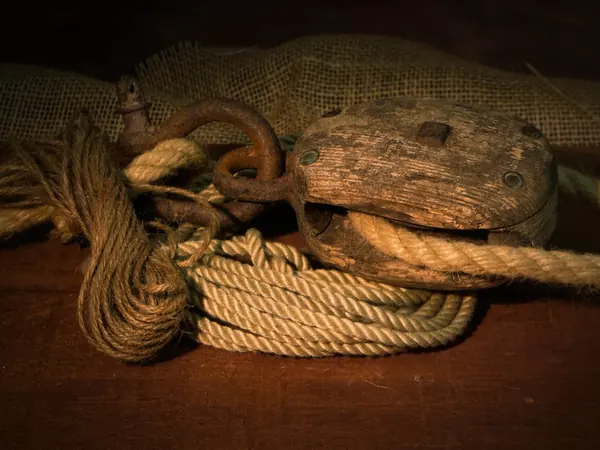
Representative photo. Check the retailer listing for the exact model, color and size.
Photo: Nautical #5 by Graham B Finney, CC BY 2.0
A compact DMM rigging plate for organizing connectors at an anchor.
The DMM Bat X-Small rigging plate is a compact aluminum plate that gives you several connection holes at one point, so carabiners, pulleys, and rope tools can hang side by side without stacking on one another. In tree work it keeps anchors, retrievable setups, and small haul systems neat and easy to read.
Stack three carabiners on one anchor sling and they twist, bind, and cross-load. A rigging plate gives each connector its own hole, spread out and easy to see. Climbers use small plates at a base anchor, on a canopy anchor for a stationary rope system, or to hang a pulley and a hitch side by side in a small haul.
The X-Small size is meant for compact, lighter setups. It is not a heavy rigging component for catching big wood. Check DMM's listed strength for this plate and keep the whole system within the lowest-rated part.
A small plate also makes rope rescue setups easier to build and check, because every connector is visible at a glance. Keep it on the saddle or in the rescue kit so it is there when you need to organize a busy anchor quickly.
Look for cracks, deep scratches, and sharp edges worn into the holes by carabiners, and retire a plate that has been dropped onto rock or concrete from height. Load connectors in the holes along the plate's intended axis. See more hardware in our blocks and hardware section.
Life-support gear must meet the applicable standard (ANSI Z133 and the manufacturer's instructions), be inspected before every climb, and be used only by trained climbers.
| Size | X-Small |
|---|---|
| Color | Orange |
| Type | Rigging plate |
Specs are from the manufacturer's published figures where available. Confirm against the product listing before you buy.
It separates connectors so each one sits in its own hole, which keeps the system tidy and avoids cross-loaded or binding carabiners.
It is meant for compact, lighter systems. Use components rated for heavy rigging forces when lowering big wood.
Pairs well with
Rock Exotica
A rigging pulley for redirecting and managing lowering lines on removals.
CMI
A steel-sheave rigging block for 5/8 in lowering lines on removal work.
ISC
A compact ISC pulley for light rigging and redirects on lines up to 5/8 in.
Petzl
A small aluminum rigging plate for organizing carabiners at an anchor.
Gap Arborist Supply
A two-sheave swing-side pulley for building compact mechanical advantage systems.
Petzl
A two-sheave in-line pulley for riding tensioned lines and speedlines.
Crosby
A choker hook that turns a length of chain into a sliding log choker.
Crosby
A forged connecting link for joining chain, hooks and rings in the field.
DMM Bat X-Small Rigging Plate (Orange)$45