
7 min read
Chainsaw Chaps vs Chainsaw Pants
How each option protects you, where each makes sense, and how to choose leg protection you will actually wear.
How chainsaw chaps and pants protect you
Chainsaw chaps and chainsaw pants work the same way. Layers of long, strong fibers sit under the outer fabric. When a moving chain cuts through the outer shell, those fibers pull out and wrap around the sprocket, clogging the drive and stopping the chain or slowing it down sharply. That is why a cut garment must be retired: the fibers that protected you once are gone.
Neither option makes you cut-proof. Protection depends on chain speed, saw power and how the contact happens. Leg protection is a last line of defense behind training, good technique and a well-maintained saw with a working chain brake.
Protective fibers also only work where they are. Chaps and most chainsaw pants protect the front of the legs, because that is where most leg contact happens when you are standing and running a saw. Some styles extend protection around the calf or cover more of the leg. Match the coverage to how you work, and keep the saw away from the parts of your body that are not covered.
Chainsaw chaps: pros and cons
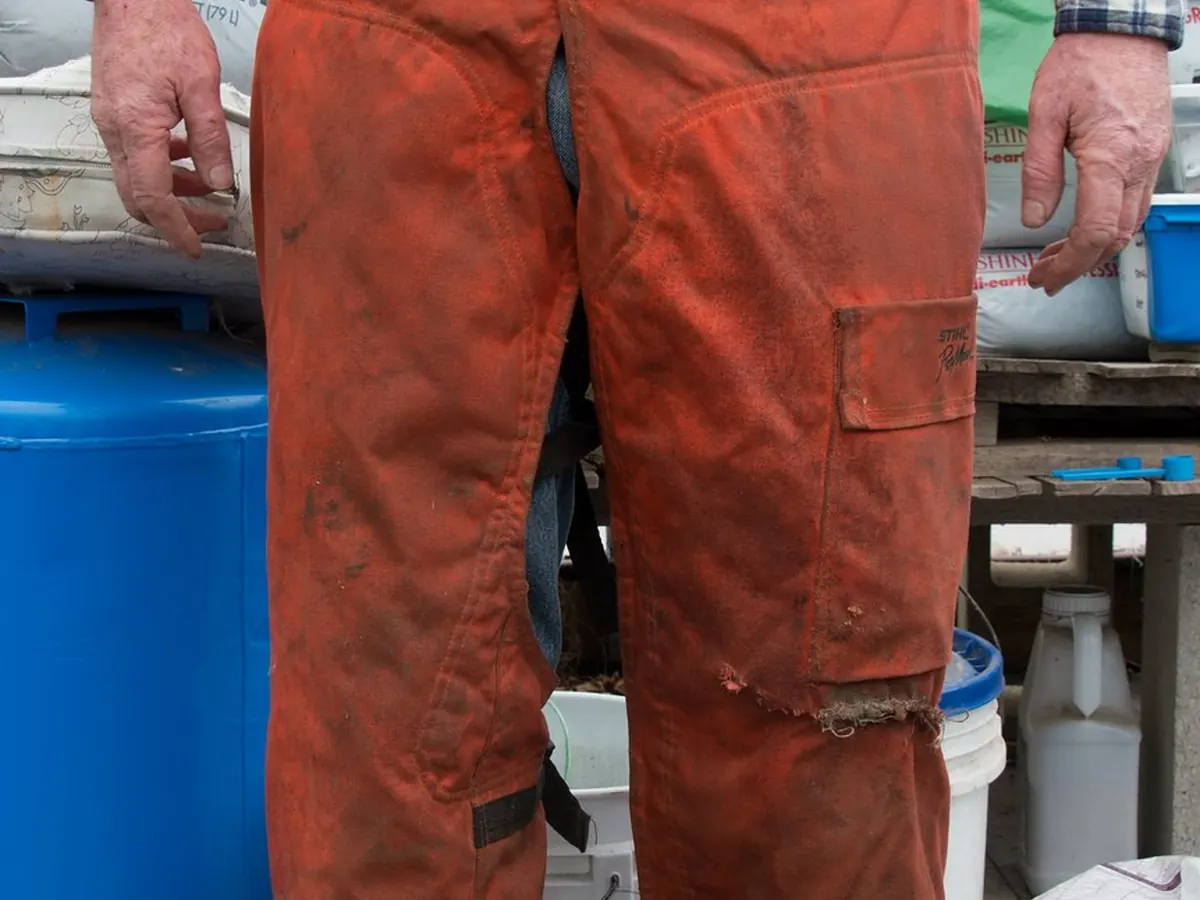
Chaps strap over your regular work pants, with protection on the front of the legs. They go on and off quickly, so ground workers can wear them when running a saw and take them off for chipper work, raking or climbing. They are usually the more affordable option and a single pair can fit several people.
The downsides are heat and fit. Chaps can be hot in summer, can shift around if not adjusted well, and often leave the backs of the calves uncovered. Many have a wrap-around lower section that adds calf protection. Browse chainsaw chaps for apron and full-wrap styles.
Fit chaps so the protective panel covers the front of your leg from the upper thigh to below the top of your boot, and snug the straps so the chaps do not slide around when you walk. Too long and they catch on brush and your boots; too short and they leave a gap above the boot where contact is common. Adjust them with the work pants and boots you actually wear.
- Quick on and off
- Usually less expensive
- Can be shared across a crew
- Can be hot and shift during work
Chainsaw pants: pros and cons
Chainsaw pants build the protective layers into the trouser itself. Because they fit like regular pants, they move with you better when climbing, kneeling or walking through brush, and they do not shift. Many have venting, stretch panels and reinforced knees. Climbers who run saws in the tree often prefer them.
Chainsaw pants cost more, you need the right size, and you wear them all day whether or not you are cutting. Lighter, cooler designs from brands like Clogger and Arbortec have made all-day wear much more comfortable. See our chainsaw pants section.
Sizing matters more with pants than with chaps. Protective layers should cover your legs from the thigh to the top of your boot when you are standing, kneeling and crouching. Try them on with your boots and harness if you plan to climb in them, and look for a waist that stays put with suspenders or a belt. Suspenders are common on chainsaw pants because the protective layers add weight.
Standards and labels to look for
In the US, chainsaw leg protection is commonly tested to ASTM F1897, and some products carry UL certification. European products are often rated to EN ISO 11393, which uses protection classes based on chain speed and design types that describe how much of the leg is covered. Read the label carefully and match what your employer requires.
ANSI Z133 covers leg protection for chainsaw operators in tree work. Requirements can differ between ground work and work aloft, so check the current standard and your company's policy rather than relying on habit or what the last crew did.
Which to choose for your work
If you are a groundworker who runs a saw for part of the day and does a lot of other tasks, chainsaw chaps are a practical, affordable choice. Keep them on the truck and put them on every time you pick up a saw.
If you run a saw for much of the day, climb with a saw, or work in hot weather, chainsaw pants are often worth the extra cost because you will wear them consistently. Many professionals own both: chaps for occasional ground use and pants for days with heavy saw work.
The best leg protection is the one you actually wear. Choose a fit and weight that is comfortable enough for your whole shift.
Think about season and job mix too. Many crews keep a pair of lighter chainsaw pants for summer and heavier pants or chaps for cold-weather work. In wet conditions, look for water-resistant outer fabric so the protective layer does not get heavy and soaked. If you work brush-heavy sites, reinforced fronts and gaiters around the boot help pants last.
Cost and value over time
A pair of chainsaw chaps is usually the cheaper upfront purchase, and a set or two can serve a whole crew. Chainsaw pants cost more and are personal items, so each worker needs their own. Over a season, though, value comes down to wear. A protective garment that sits in the truck because it is hot or awkward protects nobody.
Look at durability features if you work hard on your gear: reinforced knees, abrasion-resistant panels at the boot, and stitching that holds up to climbing and brush. Protective layers can also be degraded by fuel, bar oil and solvents, so regular washing per the label and proper storage help both chaps and pants last.
Whatever you choose, budget to replace it. Protective gear that has been cut, is badly worn, or has reached the end of the maker's recommended service life should be retired. Our chaps and protective gear section covers both options in one place.
Care, inspection and retirement
Inspect chaps and pants before each use for cuts, tears and worn areas. Wash according to the maker's instructions, since harsh chemicals or the wrong cleaning method can damage the protective fibers. Avoid patching cut areas: once the protective layer has been cut, the garment should be replaced.
Store protective gear away from fuel and solvents, and keep it out of direct sun when not in use. Pair leg protection with the rest of your PPE: helmet, eye and face protection, hearing protection, gloves and boots suited to saw work.
Common questions
Are chainsaw pants safer than chainsaw chaps?
Both can provide similar protection when rated to the same standard. Pants stay in place and are often worn more consistently, which is a real safety advantage.
Can you wash chainsaw chaps?
Yes, but follow the manufacturer's instructions. The wrong cleaning method or harsh chemicals can damage the protective fibers.
Do I need to replace chaps after a cut?
Yes. Once the protective fibers have been cut, that area no longer protects you, so retire the garment.
Do climbers wear chainsaw chaps in the tree?
Many climbers prefer chainsaw pants because chaps can be bulky aloft. Check ANSI Z133 and your employer's policy for the leg protection required for your work.