Arbpro
Arbpro Andrew Cervino Chainsaw Boots
Rugged leather chainsaw boots from Andrew for forestry and tree crews.
Typical $399
 Arborist Boots
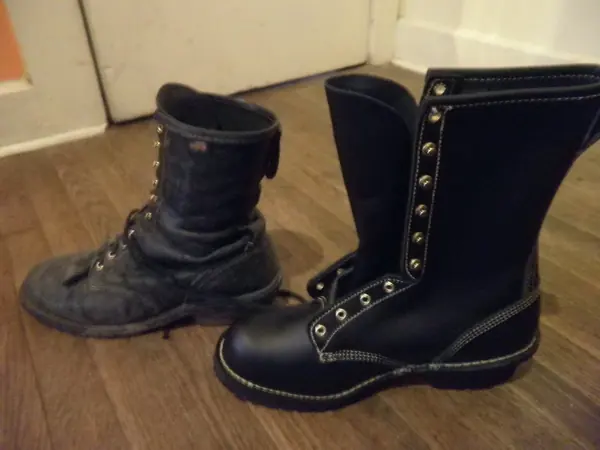
Representative photo. Check the retailer listing for the exact model, color and size.
Photo: Old Boot, New Boot by General Wesc, CC BY 2.0
Lighter cut-protective chainsaw boots in high-visibility lime green.
The Scafell Lite is one of the best-known Arbortec boots, a chainsaw boot built to be lighter than traditional protective logging boots. The lime green finish makes you easier to spot on the ground and in the canopy.
Your feet are close to the bar every time you buck a log, limb on the ground or drop a top. Chainsaw boots use cut-resistant layers in the upper that are designed to clog or slow a running chain. Ordinary leather work boots do not do that.
ANSI Z133 calls for appropriate foot protection when running a saw, and many crews now standardize on chainsaw-rated boots for anyone who touches a saw. Check the boot label for its protection class and make sure it matches your employer's requirements.
Chainsaw boots also carry protective toe caps and tough soles. That protects against dropped rounds, rolling logs and the sharp stubs left after cleanup.
Traditional chainsaw boots can feel like ski boots. The design of these scafell lite chainsaw boots focuses on cutting weight and adding flexibility, so they are easier to wear for a full day of walking, dragging brush and running the chipper.
The lime green finish adds visibility. On busy roadside jobs and in thick brush, anything that helps the ground crew and the climber see each other is worth having.
Lighter boots matter more than most people think. Over a day of walking between the truck, the chipper and the drop zone, a heavy boot adds up to real fatigue. Arbortec boots like the Scafell Lite aim to keep protection without that penalty, which is why many climbers wear them both on the ground and in the tree.
Try boots on with the socks you wear on the job. You want a snug heel, room to wiggle your toes, and no pressure on the top of the foot when you kneel. Break them in on light days before a long removal.
If you climb on spurs, check that the boot sole is stiff enough for the stirrup. Many climbers keep a separate pair of climbing boots for spur work. Compare other arborist boots if you need a different style.
Lace them firmly around the ankle for support on slopes, and leave a little room across the forefoot so your feet can swell during a hot day without pinching.
Clean off mud and sap after each job, let the boots dry away from direct heat, and treat the leather as the maker recommends. Retire boots that have taken a chain cut, since the protective layers have done their job and will not protect the same way again.
Check soles for wear and separation and replace boots when the tread no longer grips. Remember that boots are only one part of saw PPE: chaps or chainsaw pants, eye and hearing protection, gloves and a helmet are all required under ANSI Z133.
| Type | Chainsaw protective boot |
|---|---|
| Color | Lime green |
| Toe | Protective toe cap |
| Sole | Lugged rubber outsole |
| Protection | Check the label for cut protection class |
Specs are from the manufacturer's published figures where available. Confirm against the product listing before you buy.
Yes, they are made as chainsaw boots. Check the label for the exact protection class before relying on them for a specific requirement.
Many climbers wear them on rope. For spur work, make sure the sole is stiff enough to support the stirrup.
Fit varies by foot. Try them on with your work socks and check heel hold and toe room.
Pairs well with
Arbpro
Rugged leather chainsaw boots from Andrew for forestry and tree crews.
Arbpro
Arbpro work boots for arborists who split the day between climbing and ground work.
Haix
Cut-protective leather chainsaw boots with high-visibility orange for saw-heavy work.
Arbortec
A chainsaw-protective arborist boot built for climbing and ground work.
Arbpro
Arborist work boots built for climbing, spurring and long days on the job.
Wesco
Handmade 10 inch lineman-style boots built to stand on spurs all day.
Wesco
Black 10 inch handmade Wesco boots built for spurs and long climbs.
ArbPro
Replacement laces for ArbPro Clip N Step and Evo climbing boots.
Arbortec Scafell Lite Chainsaw Boots, Lime Green$329