Big Jim's
Big Jim's Hitch Breaker
A small tending aid for climbers who want a friction hitch that releases cleanly.
Typical $45
 Eye & Eye Prusiks
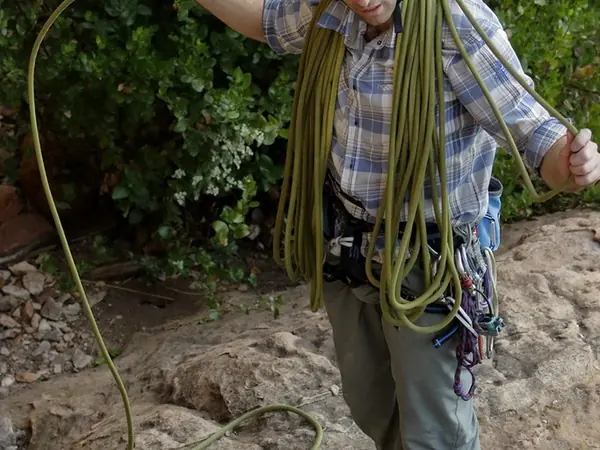
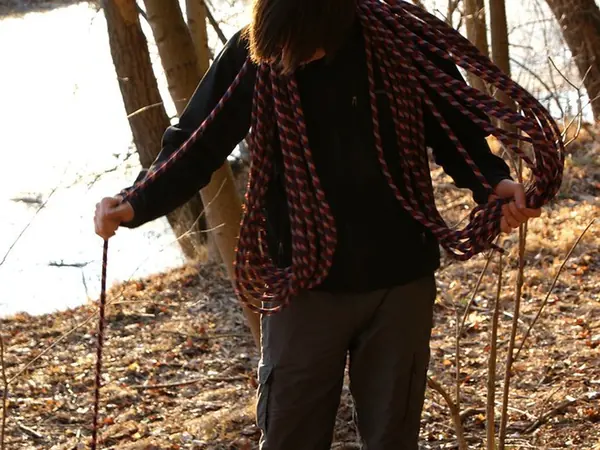
Representative photo. Check the retailer listing for the exact model, color and size.
Photo: coiling by michael pollak, CC BY 2.0
A sewn eye-to-eye hitch cord from Samson for friction-hitch climbing.
The Samson Bail Out XL is a sewn eye-to-eye hitch cord for climbers who tie a friction hitch on MRS or SRS. Samson's Bail Out cord is built to handle the heat a hitch sees, and the XL gives you a longer cord to work with.
A longer cord gives you room for extra wraps or a hitch that needs more tail, such as a VT on a slick rope. Climbers on bigger-diameter lines or heavier kits often reach for an XL cord so the hitch grips without having to be over-tightened.
Test it low on your climbing line, tend it with a micro pulley, and dress the hitch the same way every time so it behaves predictably.
Heavier climbers, or anyone carrying a big saw and a full rack, often find a hitch needs more grip than a standard-length cord gives. A longer cord lets you add wraps or braids to the hitch without running out of tail. Just keep the hitch neat and dressed, because extra length can also mean extra slack if it is set sloppily.
Look for glazing, stiff sections, and worn stitching at the eyes before each climb. Retire the cord after any heat damage or shock load, and never alter the sewn terminations.
Store spare hitch cords in a dry pouch away from sunlight and chemicals, and date them when they go into service so you know how long each one has been working.
Compare more eye-and-eye prusiks. Life-support gear must meet the applicable standard (ANSI Z133 and the manufacturer's instructions), be inspected before every use, and be used only by trained climbers.
| Brand | Samson |
|---|---|
| Terminations | Sewn eye at each end |
| Length | XL |
Specs are from the manufacturer's published figures where available. Confirm against the product listing before you buy.
It is a longer version of the cord. Check the listing for the exact length before you order.
Distel and VT hitches are common choices. Use the hitch you were trained on and test it low first.
Pairs well with
Big Jim's
A small tending aid for climbers who want a friction hitch that releases cleanly.
DMM
A matched hitch-tending pulley and connector set for building a friction hitch system.
Yale Cordage
An 8mm hand-spliced eye-to-eye hitch cord for consistent grab and release.
Yale Cordage
Heat-resistant 10mm hitch cord with terminated eyes for moving-rope climbing.
Yale Cordage
10mm Beeline eye-to-eye hitch cord in black, easy to pick out on the bridge.
Armor Prus
Slim 8mm hitch cord with sewn eyes for a grippy, responsive friction hitch.
Samson Rope
3/8 in. Tenex cord with sewn eyes for prusik hitches and general use.
Samson Rope
Hand-spliced hitch cord from Samson made for friction hitches on climbing lines.
Samson Bail Out XL Sewn Eye-to-Eye Hitch Cord$49